Beyond Capitalism or Communism
19句圣言的19个对话构建(主题九)

作者:纳德 · 萨伊迪 (Nader Saiedi)
译者:苏英芬
(译注:纳德 · 萨伊迪博士是专业的社会学教授,也是研究巴哈伊信仰先驱巴布原文著作的权威,他年轻时是个活跃的马克思主义者,后经独立探寻而成为巴哈伊信徒。他以巴哈伊信仰缔造者巴哈欧拉领受天启的19句关键圣言,展开了19个社会对话构建主题的论述,值得巴哈伊信徒和世人在这个新旧世界秩序交替的乱世里,进行实质对话的参考。)
————————
Baha’u’llah writes:
The heaven of divine wisdom is illumined with the two luminaries of consultation and compassion and the canopy of world order is upraised upon the two pillars of reward and punishment. (Third Ishraq)
巴哈欧拉写道:
“神圣智慧之天由磋商和怜悯这两颗光体照亮,世界秩序之天篷由奖赏和惩罚这两大柱石所支撑。”(第三道光辉/第三伊什拉格)
The above statement, mentioned in Ishraqat, is frequently affirmed by Baha’u’llah in His various subsequent writings. In one of these writings, after quoting this statement, He mentions that these affairs pertain to the sovereigns of the age. In other words, for Baha’u’llah, this statement is intended to be a guide to political philosophy. The concise beauty of this statement hides its amazing complexity.
上述陈述在《光辉书简》(《伊什拉加特书简》)中提到,并在巴哈欧拉随后的各种著作中频繁确认。在其中一篇著作中,引用了这一表述之后,祂提到这些事务与当代的君主有关。换句话,对巴哈欧拉来说,这一表述旨在成为政治哲学的指南。这一表述的简洁之美隐藏了惊人的复杂性。
A real social order is an order that is defined by justice and unity. This lasting order, based on unity and justice, consists of two seemingly-opposite principles. One principle is consultation and compassion, whereas the other principle is reward and punishment. In other words, there are four bases of an authentic social order: consultation, compassion, reward, and punishment. While these four factors have diverse implications about various concepts, one of their main implications is related to the choice between the two forms of political economy, namely, Capitalism and Communism.
真正的社会秩序是由正义和团结定义的秩序。基于团结和正义的这个持久性秩序,包括两个貌似相反的原则。一个原则是磋商和怜悯,另一个原则是奖赏和惩罚。换句话说,一套真正的社会秩序有四个基础:磋商、怜悯、赏与罚。尽管这四个因素对各种概念有着不同的涵义,但它们的主要涵义之一与两种政治经济体制的选择有关,即资本主义和共产主义。
What Baha’u’llah presents is a vision which transcends both, and yet contains within itself the elements of the two opposing systems. ‘Abdu’l-Baha has frequently emphasized that one of the central teachings of Baha’u’llah is “ta’dil-i-Ma’ishat.”
巴哈欧拉提出的是一种超越两者(资本和共产主义)的愿景,该愿景又在其内包含了两个对立系统的元素。阿博都-巴哈经常强调巴哈欧拉的中心教义之一乃是“ta’dil-i-Ma’ishat” 。
Unfortunately, this term has never been translated within English discussions of this same teaching. The usual translation is the elimination of the extremes of wealth and poverty. But the term literally means moderation and justice in sustenance or economic means. The word ta’dil, derived from ‘adl or justice, means both enforcing justice, and moderation. Economic justice, therefore, is not the forced equality of outcomes (Communism) or the forced extremes of inequality (Capitalism).
遗憾的是,对这同一教义的英语讨论中,这个阿拉伯术语从未被翻译出来。常见的翻译是消除极端贫富。但该术语的字面意思是生计维持或经济手段上的适度和公正。Ta’dil这个字源于‘adl或正义,既意味着实施正义,也意味着适度。因此, 经济正义不是强制性的结果之平等(共产主义),或强制性的极端不平等(资本主义)。
Instead, it means economic freedom accompanied by moderate inequality. Such moderation and freedom is dependent on the four factors mentioned in Baha’u’llah’s statement.
相反,它意味着伴随着适度不平等的经济自由。这种适度和自由有赖于巴哈欧拉表述中提到的四个因素。
1. Critique of Communism
1.共产主义之批判
The philosophy of Communism defines itself as a philosophy of consultation and compassion, the first two elements in Baha’u’llah’s statement. According to this philosophy, economic decisions must be based on the collective consultation of the community.
共产主义的哲学将自身定义为磋商和怜悯的哲学,这是巴哈欧拉表述中的前两个元素。根据这一哲学,经济决策必须基于社区的集体磋商。
Therefore, individual economic decisions are replaced by collective decisions. This means that both the economic activities and the economic outcomes of the individuals are decided by society. This is possible because there is no private property in society, which in turn leads to equal income for all members of society. Marx’s support of Communism is justified by his criticism of the injustice of a Capitalist system.
因此,个人的经济决策被集体决策取代。这意味着个人的经济活动和经济结果,都是由社会所决定的。这是有可能的,因为在社会中不存在私人财产,这反过来导致社会所有成员的收入都是相等的。马克思对共产主义的支持,因他对资本主义体系的不公正之批判而得到正当化。
In Capitalism, Marx believes, those who do not work are appropriating the surplus produced by others. Marx calls this unjust appropriation exploitation. The solution to exploitation, therefore, becomes Communism. Furthermore, Marx thinks that the state is always a repressive state, an agent for the interests of the dominant class in its exploitation of the exploited class. Therefore, Marx believes, with the elimination of private property and the elimination of economic inequality, the state would “wither away,” namely, it would die automatically.

在资本主义中,马克思相信,那些不工作的人正在侵占他人创造的剩余价值。马克思把这种不公正的侵占称为剥削。因此,解决剥削的办法就变成了共产主义。此外,马克思认为国家始终是一个压迫性的国家,是统治阶级在对被压迫阶级进行剥削中的利益代理人。因此,马克思相信,通过消除私有财产和消除经济不平等,国家才会“消亡”,即它将自动消亡。
A Communist state is a society in which the state does not exist.
共产主义国家是一个不存在国家的社会。
Communist philosophy is right when it praises both consultation and compassion. However, this philosophy eliminates the entire notion of reward and punishment, the two other factors discussed by Baha’u’llah.
共产主义哲学在赞扬磋商和怜悯方面是正确的。然而,这一哲学完全消除了赏与罚的概念,那是巴哈欧拉讨论的另外两个因素。
Marx was right to reject exploitation as immoral. But exploitation is the very essence of negation of the twin principles of reward and punishment. Namely, when the work and the achievement of an individual are not related to the reward they receive in society, we have exploitation and injustice.
马克思驳斥剥削认为是不道德的,这想法是正确的。但剥削的本质正是对赏与罚两个原则的否定。换句话说,当一个个体的工作和成就与他们从社会中得到的奖赏无关时,就会出现剥削和不公正。
Unbridled Capitalism is not really a true expression of the system of reward and punishment because the connection between productivity/work and reward is incomplete.
放任的资本主义实际上并不是赏罚体系的真正表达,因为生产力/工作与奖赏之间的联系是不完整的。
But the solution offered by Marx, namely Communism, means that all relations between productivity/work and reward are completely eliminated. All would be equal regardless of what they would or would not do. Communism becomes the universalization of exploitation.
但是马克思提出的解决方案,即共产主义,意味着所有生产力/工作与奖赏之间的关系都被完全消除。无论个体是否工作,人人平等。共产主义成为剥削的普遍化。
If Capitalism was partly an exploitation of the non-owners by the owners, Communism eliminates the entire system of reward and punishment.
如果资本主义在某种程度上是所有者对非所有者的剥削,那么共产主义就消除了赏与罚的整个体系。
Communist philosophy has at least two further major contradictions and inadequacies. First, Communism sees itself as the realization of freedom, compassion, and consultation. That is why it assumes that there would be no state and no coercion in a Communist order. The problem, however, is that the only way that the forced equality of outcomes can be maintained in society is through the elimination of all kinds of individual freedoms and autonomy.
共产主义哲学至少具有两个主要的矛盾和不足之处。首先,共产主义将自己视为自由、怜悯和磋商的实现。这就是为什么它认为在共产主义秩序中将没有国家和强制的存在。然而,问题在于为了在社会中维持强制性的齐头(结果)平等,唯一的方法就是消除各种个体自由和自主权。
If a slight degree of economic freedom emerges in society, necessarily social inequality would appear. Therefore, the only way that such imposed equality can be realized is through a permanent institutional control of the detailed aspects of an individual’s life and activities.
如果社会出现了轻微的经济自由,社会不平等就会不可避免地出现。因此,实现这种强加的平等的唯一方式,只有通过对个体生活和活动的方方面面进行永久性的制度控制。
But this means that Communism necessarily becomes a totalitarian state and not a state-less society. That is why contrary to all Marxist expectations, the emergence of Communism always led to a bigger, more repressive, and more interventionist state.
但这意味着共产主义必然会成为一个极权主义国家,而不是一个无国家的社会。这就是为什么与所有马克思主义者的期望相反,共产主义的出现总是导致更大、更具压迫性和更具干预性的国家的存在。
Instead of compassion, coercion; and instead of consultation, the arbitrary dictates of a Police state define the actual reality of a Communist society.
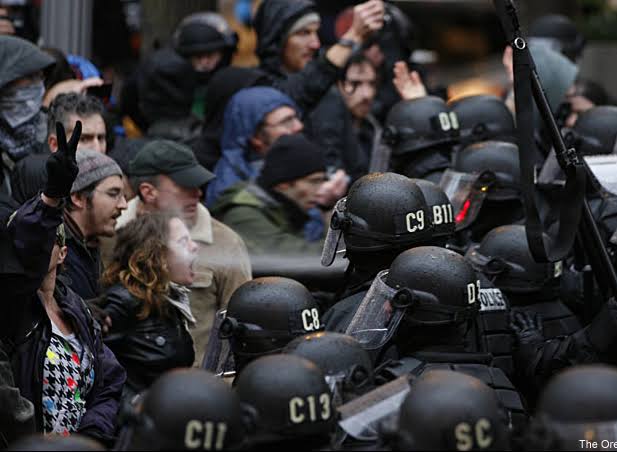
于是强制取代了怜悯,警察国家的专断命令取代了磋商,定义了共产主义社会的真正现实。
The state did not wither away. Instead, it always became a totalitarian state of absolute repression and collective slavery of the members of society to state bureaucracy.
国家并没有消失。相反,它总是成为极权主义国家,对社会成员进行绝对镇压,并将他们变成国家官僚机构的集体奴役。
The second problem is that Marx, by his negative definition of the state, could not realize the significance of the democratic form of state in a modification of Capitalism. Democracy, therefore, was ignored as a bourgeoisie trick to continue the exploitation of the non-owners.
第二个问题是,由于马克思对国家的负面定义,使他无法明白在一个修正版的资本主义中,国家的民主形式的重要性。因此,民主被忽略为是资产阶级用来继续剥削非所有者的把戏。
Likewise, like Rousseau’s general will, Marx assumed that society has the right to extend public decision making to the detailed aspects of individual economic life. But again, such a conception of consultation is totalitarianism and enslavement of humanity.
同理,像卢梭的普遍意志一样,马克思也认为社会有权将公共决策扩展到个体经济生活的方方面面。但同样,这种磋商的概念是极权主义和对人类的奴役。
2.Critique of Unbridled Capitalism
2.对放任资本主义的批判

If the advocates of Communism defined their philosophy in terms of consultation and compassion, the advocates of Capitalism or liberalism define themselves in terms of the centrality of reward and punishment.
如果共产主义的支持者就磋商和怜悯来定义他们的哲学,而资本主义或自由主义的支持者以赏罚的核心性为自己作定义。
The central idea is economic freedom or liberty. Individuals engage in the market, and, depending on their productivity and achievement, they receive consequent rewards or punishment.
核心思想是经济的个人自由或公民自由。个体参与市场,并根据其生产力和成就,获得相应的奖赏或惩罚。
This system is perceived to be both just, because the outcomes are determined by the activities and merits of individuals, and progressive because the system of economic liberty motivates individuals to work efficiently, to imagine alternatives, and to be creative.
这个系统被认为既公正——因为结果取决于个体的活动和功绩——又具有进步性,因为经济(公民)自由的制度激励个体高效工作、又能想象替代方案而且具有创造力。
The result is both increasing creativity in society and rising prosperity for society. Liberalist philosophy is right when it praises justice and liberty or the system of reward and punishment. However, this conception eliminates the two concepts of consultation and compassion.
结果是社会中创造力的增加,社会繁荣不断提高。公民自由主义哲学在赞扬公正和自由或赏罚体系时是正确的。然而,这种观念排除了磋商和怜悯这两个概念。
The result is that the very reward and punishment themselves become distorted. Liberalist philosophy sees humans as selfish and utilitarian entities whose sole motivations are the pursuit of their own interests. Consequently, unbridled market competition becomes the only regulating principle of society.
结果是赏罚本身变得扭曲。自由主义哲学将人类视为自私和功利的实体,其唯一的动机是追求自己的利益。因此,放任的市场竞争就成为社会的唯一调节原则。
The problem is that such a system destroys the foundation of a true system of liberty, justice, reward, and punishment.
问题就在于这样的系统摧毁了真正的自由、公正、奖励和惩罚体系的基础。
The accumulation of wealth in the hands of a few leads to an increase of unequal opportunities in society. Consequently, under the lack of equal opportunity, no existing system of reward and punishment would remain truly just since it hardly reflects the real productivity or achievement of the individuals.
财富在少数人手中的积累导致社会中不平等机会的增加。因此,在缺乏平等机会的情况下,任何现存的赏罚体系都不会保持真正的公正,因为它几乎不能反映个体的真实生产力或成就。
It is also true that competition eventually destroys itself. The result of competition is an increase in inequality, which leads to a situation where, eventually, no ordinary person can compete with the economic giants that control the various areas of business. Competition, therefore, leads to monopoly and the death of freedom and liberty.
竞争最终会自我毁灭,这也是事实。竞争的结果是加剧不平等,它又导致普通人终究无法与掌控各个商业领域的经济巨头竞争的情况。因此,竞争导致垄断,以及个人自由和公民自由的消亡。
3. Towards a Holistic Social Order
In this short space we cannot discuss the complexity of Baha’u’llah’s statement. However, the essence of His utterance is that all four factors need to be united to realize freedom, justice, and unity in society.
3. 迈向整体社会秩序
在这有限的篇幅里,我们无法讨论巴哈欧拉表述的复杂性。然而,祂的圣言的精华在于所有四个因素都需要结合起来,才能实现社会的自由、正义和团结。
Marxian criticism of Capitalism as a system of exploitation was partly right when it emphasized the unequal opportunities between the owners (the Capitalists) and the non-owners (the workers).
马克思对资本主义的批判,即将其视为一种剥削体系,在强调所有者(资本家)和非所有者(工人)之间的不平等机会时,部分是正确的。
Liberty and justice, therefore, turns into the extremes of inequality, poverty, corruption, and direct and indirect forms of coercion.
因此,公民自由和正义变成了极端的不平等、贫困、腐败以及直接和间接形式的强制行为。

Reward and punishment are absolutely necessary for a just and free society.
赏罚对于建立一个公正和自由的社会是绝对必要的。
That is why Communism cannot be a solution. This also means that a just order is neither one of the forced equality of outcomes nor one of the extremes of inequality.
这就是为什么共产主义不能是一个解决之道。这也意味着一套公正秩序既非强迫的结果平等,也不是极端的不平等。
Baha’u’llah’s culture glorifies work and industry. The worst people in the sight of Baha’u’llah are those who can work and yet they remain idle and expect others to pay them. That is why Baha’u’llah has forbidden both begging and paying to the beggar.
巴哈欧拉的文化推崇工作和勤劳。在巴哈欧拉眼里,最不好的人是那些能够工作但仍然懒惰,并指望别人付钱给他们的人。这就是为什么巴哈欧拉禁止乞讨和对乞丐施舍。
But reward and punishment would be truly an occasion for justice and liberty when the system of reward and punishment is rooted within a system that institutionalizes consultation and compassion.
但是赏罚只有在赏罚系统根植于一个把磋商和怜悯制度化的体系下,才能真正成为正义和公民自由的契机。
Consultation, in the writings of Baha’u’llah, is, before all else, the realization of political democracy. One of the reasons for Marx’s mistake about Capitalism, state, and political democracy was that he did not realize that through the emergence of political democracy, the basic equality of opportunities could be institutionalized in society. The economic non-owners become equal with the minority owners within the realm of political voting.
在巴哈欧拉的著作中,磋商首先是实现政治民主。马克思对资本主义、国家和政治民主的错误看法的理由之一是,他没有明白到通过政治民主的出现,机会的基本平等是可以在社会中制度化的。在政治投票领域内,经济上的非所有者与少数所有者都变得平等了。

Therefore, political democracy can create legislations to negate the harmful excesses of an unbridled market system and move towards a system in which citizens are endowed with fundamental rights, without encouraging idleness or dependence on the state. Unlike Marxian expectation, the Capitalist societies moved towards a sort of welfare state when Capitalism was accompanied by political democracy. That is why the actual politics of the left loves the state, praises a big state, and sees the state as the liberator.
因此,政治民主可以立法来消除放任的市场体系里的有害过度现象,并朝着一个公民被赋予基本权利的体系迈进,而不鼓励懒惰或对国家的依赖。与马克思的期望不同,当资本主义伴随着政治民主时,资本主义社会会朝着一种福利国家的方向发展。这就是为什么左翼的实际政治学喜爱国家、赞扬大国,并将国家视为解放者。
This is the total opposite of the Marxian view where the elimination of state was liberation. Compassion refers to a new culture, a culture in which people love each other and associate with one another in friendliness and affection. One of the manifestations of such a system of compassion is a culture of strong families and the sanctity of marriage, which is crucial to the production of moral and active citizens.
这与马克思主义的观点完全相反,该观点认为消灭国家就是解放。怜悯指的是一种新文化,一种人们彼此相爱、友好相处的文化。这种怜悯的体系的一个展现,是一个有着强大的家庭和婚姻的神圣性的文化,这种文化对于培养有道德且积极的公民至关重要。

Furthermore, such a culture means that, in addition to state policies, individuals would see themselves as responsible for others. State responsibility should not replace the moral responsibility of individuals in helping one another. A spiritual order is one of liberty, justice, consultative democracy, and compassion.
此外,这样的文化意味着,除了国家政策之外,个体也会将自己视为对他人有责任感。国家责任不应取代个体在相互帮助方面的道德责任。一套精神秩序指的是一个自由、正义、磋商性民主以及怜悯的秩序。
(18/01/2024)
(资料来源:https://user-hrqc9mo.cld.bz/English-Publications/Ninth-Reflection)
 萬物合一的時代!WE ARE ONE!
留下评论