A SHORT HISTORY OF THE
BELTHORN ESTATE BAHÁʼÍS
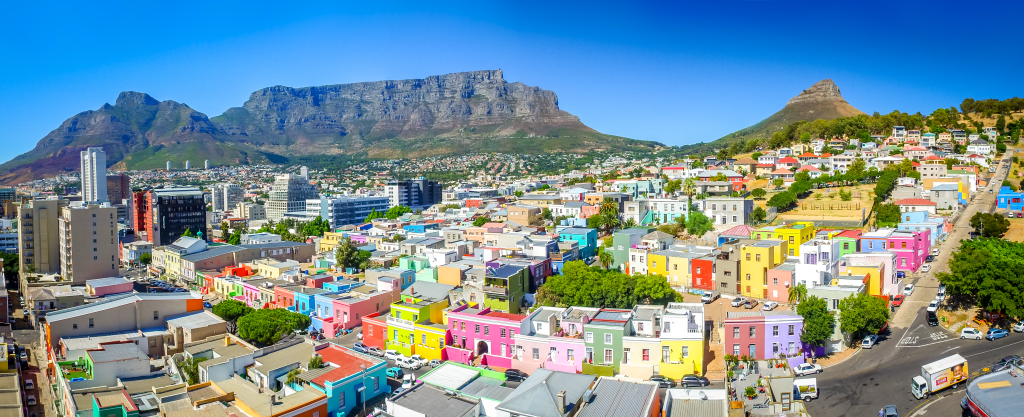
Malay Quarter of Cape Town, South Africa
【Baháʼís‘ History】
(editor’s note: Belthorn, also called Belthorn Estate or Belthorne Estate, is a suburb in the City of Cape Town, Western Cape, South Africa. The postal/box code commonly shown is 7780)
by Mogamat Dollie
Introduction
This brief history focuses on four families who relocated to Belthorn Estate from areas that had been declared “white areas” by the minority white South African government during the apartheid era.
These four families were a mix of Baháʼís, Muslims, and Christians. Their stories are not only family histories, but also part of the wider story of displacement, resilience, faith, service, and community life in Cape Town.
Institutionalised Segregation
Apartheid officially began in 1948 and was enforced through a series of laws that mandated segregation in nearly every aspect of life, including where people could live, work, and go to school. Under this system, the white minority government imposed strict laws to maintain white political and economic dominance, restricting the rights of Black South Africans and other non-white South Africans.
This article highlights one particular aspect of apartheid: **where people were permitted to live**. Rather than going back to 1948, the focus here is on the years 1963, 1964, and 1965, and the effects that followed for the Belthorn Baháʼís.
A cornerstone of apartheid was the law governing residential areas, known as the **Group Areas Act**, commonly referred to by locals simply as “The Group”. This legislation deeply affected the four families discussed here and shaped the circumstances of their relocation.
Forced Relocation and the Growth of New Suburbs
Living conditions for many non-white communities in the Cape Town area were often overcrowded and difficult. Basic services such as water and electricity were unevenly available, and many families lived under challenging conditions.
Under the Group Areas Act, many communities were displaced. The exodus began with District Six, which was declared a white area in 1960. Other suburbs declared white areas included Simonstown, Constantia, Newlands, parts of Claremont, Rondebosch, and many other areas where railway lines often became racial boundaries.
The government selected areas on the outskirts of Cape Town and began the mass construction of houses, often known as “sub-economic” housing. This started around 1960 and was intended for those who could not afford to build or buy private property.
Over the years, large numbers of non-white residents were relocated to areas such as Bonteheuwel, Heideveld, Hanover Park, Manenberg, Ocean View, Atlantis, Mitchells Plain, and Lavender Hill. Many of these suburbs later became severely disadvantaged areas, shaped by the long-term social consequences of apartheid planning.
Belthorn Estate: An Exception
Belthorn Estate was somewhat different. Wealth and affordability played a role in determining who could live there. Established in 1960, the houses in Belthorn were privately built and privately owned, although infrastructure was initially very limited.
The name “Belthorn” comes from two main roads: **Belgravia Road** and **Thornton Road**.
Between 1960 and 1970, infrastructure improvements made Belthorn a highly sought-after suburb. Over time, hard-surfaced roads, street lights, public transport, sewer lines, a corner grocery store, and nearby sports facilities were established.
Four Baháʼí families relocated to Belthorn Estate:
– The Davids family, to 43 Wheatfield Road
– The Noor family, to 29 Bamberry Road
– The Abrahams family, to 1 Orange Street
– The Dollie family, to Thornton Road
The homes were identified not only by their street numbers, but also by names given by their owners. Some Baháʼí families gave their homes names associated with the Faith.
– The Davids residence was called **Al Bayan**.
– The Noor family called their home **Mount Carmel**.
– The Dollie residence was named **Yole-Dale** by the previous owner.
Al Bayan: The Davids Family Home
**Al Bayan** was built by a Baháʼí and completed in 1963. The Davids family were its first occupants.
Despite the lack of infrastructure at the time, Al Bayan immediately became a hub of Baháʼí activity for many years. Cassiem and Rugaya Davids graciously hosted many overseas visitors and local friends from near and far.
As the family grew through marriage, many members of the extended family began their married lives from this home.
Because the Davids family house was perhaps among the first in Belthorn, the neighbours came to know them as a Baháʼí family. They were well respected and accepted by the vast majority of residents. There were, however, a few exceptions. A small number of people avoided walking past the property or shouted verbal abuse at the home. Some of this abuse came from outside the immediate community, much to the embarrassment and annoyance of residents who knew the perpetrators.
Al Bayan is no longer owned by the Davids family. The generations and extended family have gone on to successful lives in different parts of South Africa and overseas. Yet, for them, it all began in Belthorn Estate in 1963.
Mount Carmel: The Noor Family Home
The Noor family called their home **Mount Carmel**. Asa and Majiet, also known as Michael, moved into their home in 1964 on the day their son Richard was born.
The household included two brothers, four sisters, and Majiet’s father, affectionately known as Oupa. Later, in 1970, Majiet’s three nephews lived in a caravan parked in the backyard.
For many years, Asa and Majiet hosted Feasts, study classes, and social Baháʼí events. A small but humble Baháʼí library was also remembered in this home, serving the Cape Town Baháʼí community.
It was also at this home that the author’s sister and her husband exchanged their Baháʼí marriage vows.
Today, a member of the Noor family still resides in the home, which remains fully owned by the family. Some family members have moved overseas, including to the United Kingdom and the United States, while others remain in Cape Town. Like the other families, their story in this suburb began in Belthorn Estate in 1964.
The Abrahams Home
Isaac and Katherine Abrahams relocated to 1 Orange Street in 1964. Isaac was known as Uncle Abie, and Katherine was known as Aunty Katie.
They did not have children of their own, and Aunty Katie’s parents lived with them. Their home also hosted regular Baháʼí Feasts.
Uncle Abie owned a black Morris vehicle. Together with Aunty Katie, he provided transport for the Belthorn Baháʼís so they could attend Baháʼí meetings around the Cape Town area.
Uncle Abie also worked as a barber on the side. On Sunday mornings, in the backyard, he would give boys their school haircuts.
The Abrahams home has since been passed down to Uncle Abie’s relatives, who remain well informed about the Baháʼís and the history connected with the house.
Yole-Dale: The Dollie Family Home
In 1965, the Dollie family moved voluntarily from the Bo-Kaap, also known as the Malay Quarter, to Thornton Road. Their home was called **Yole-Dale** by the previous owner, and the name remained.
Amiena and Abdullah moved in with two brothers and four sisters.
Nine months after moving in, Abdullah sadly and unexpectedly passed away on his birthday. At the same time, Amiena, who was the only Baháʼí in the family, was disowned by her own relatives. It was, to put it mildly, an extremely difficult time.
The three Baháʼí families — the Davids, Noors, and Abrahams — rallied around the Dollie family. Their support, assistance, encouragement, compassion, and comfort cannot be ignored or overstated.
At the time, these qualities may have been taken for granted as normal. Looking back after many decades, however, one can recognise the exceptional spirit of service shown by the Davids, Noor, and Abrahams families.
Over time, the whole Dollie family became Baháʼís. Today, a member of the Dollie family still resides at Yole-Dale, and the property remains fully owned by the Dollie family. Other family members now live in Switzerland and Australia, while the rest of the family remains in South Africa.
Like the other families, the Dollie family story also began in Belthorn Estate.
Reflections from Former Residents
Comment from a Former Resident
In those days, District Six consisted mainly of semi-detached houses that could stretch from one road to another. One could consider it a form of cluster housing.
These properties were mainly owned by Jewish and Indian residents. The people were comfortable in the way they lived, despite being mostly middle- and low-income earners.
The community was diverse and included many ethnic groups, including white residents. There was harmony among these racial groups. What was especially important was the close proximity of the working-class population to their places of employment.
Through the application of the Group Areas Act, this community was destroyed through forced relocation to areas mainly in the Cape Flats, far from people’s workplaces. They were forced to live in communal cluster housing in sub-economic areas. The social fabric, community life in all its diversity, and the culture of the people were destroyed.
The Noor family moved from Stegman Road, Claremont, to Bamberry Road. Baháʼí marriage vows were exchanged during a Baháʼí wedding ceremony held on 21 March 1972, Naw-Rúz, at the home of Majiet and Asa Noor.
Another Comment from a Former Resident
Thank you for the lovely memories and for the effort in drafting the history of Belthorn.
One person commented at Feast on the pressure of life for the early believers, and another member of the community had been unaware of it. Although these difficulties did not define who everyone became, there is value in finding time and gathering knowledge from each person so that these memories may be recorded.
Some remembered highlights include:
– The deep consultations among the elders, where the study of religion was conducted in different homes and helped develop young minds.
– The many teaching trips undertaken by all the families over time to different parts of the province.
– The spirit of Ubuntu shown by neighbours, including families such as the Mitchells, Sheldons, Paulses, Wentzels, Van Hartes, and Joshuas.
– The soccer club started by the Al Bayan household.
– The continuing connectedness of the families, which remains strong despite distance and time.
Such memories remind us that the history of the Belthorn Baháʼís is not only a record of houses, addresses, and dates. It is a story of faith, endurance, service, friendship, and community life under difficult historical conditions.
Conclusion
The story of the Belthorn Baháʼís is a local history, but it carries wider meaning. It shows how families displaced by unjust laws nevertheless built homes of hospitality, service, learning, worship, and mutual support.
In the midst of apartheid’s divisions, these families helped create spaces of unity. Their homes became places where people gathered, studied, prayed, celebrated, consulted, and served. Their example reminds us that even under conditions of injustice, the human spirit can create bonds of love, dignity, and hope.
Author:** Mogamat Dollie
**Email:** mogamatdollie@yahoo.com.au
*Readers are welcome to share comments, corrections, or additional memories connected with this history.*
(29/04/2026)


发表评论